AEO vs GEO vs SEO: what the terms mean and how they overlap

Kaan Ersoy3 min read
SEO (search engine optimization) is the work of ranking pages in search results. AEO (answer engine optimization) began as optimizing for direct answers (featured snippets, voice assistants) and now means being the answer an AI gives. GEO (generative engine optimization) was coined in a 2023 research paper for being named and cited in AI-generated answers. AI SEO and LLM SEO are marketing names for the same thing. Today AEO and GEO mean almost the same work, and both build on SEO, because AI assistants search before they answer.
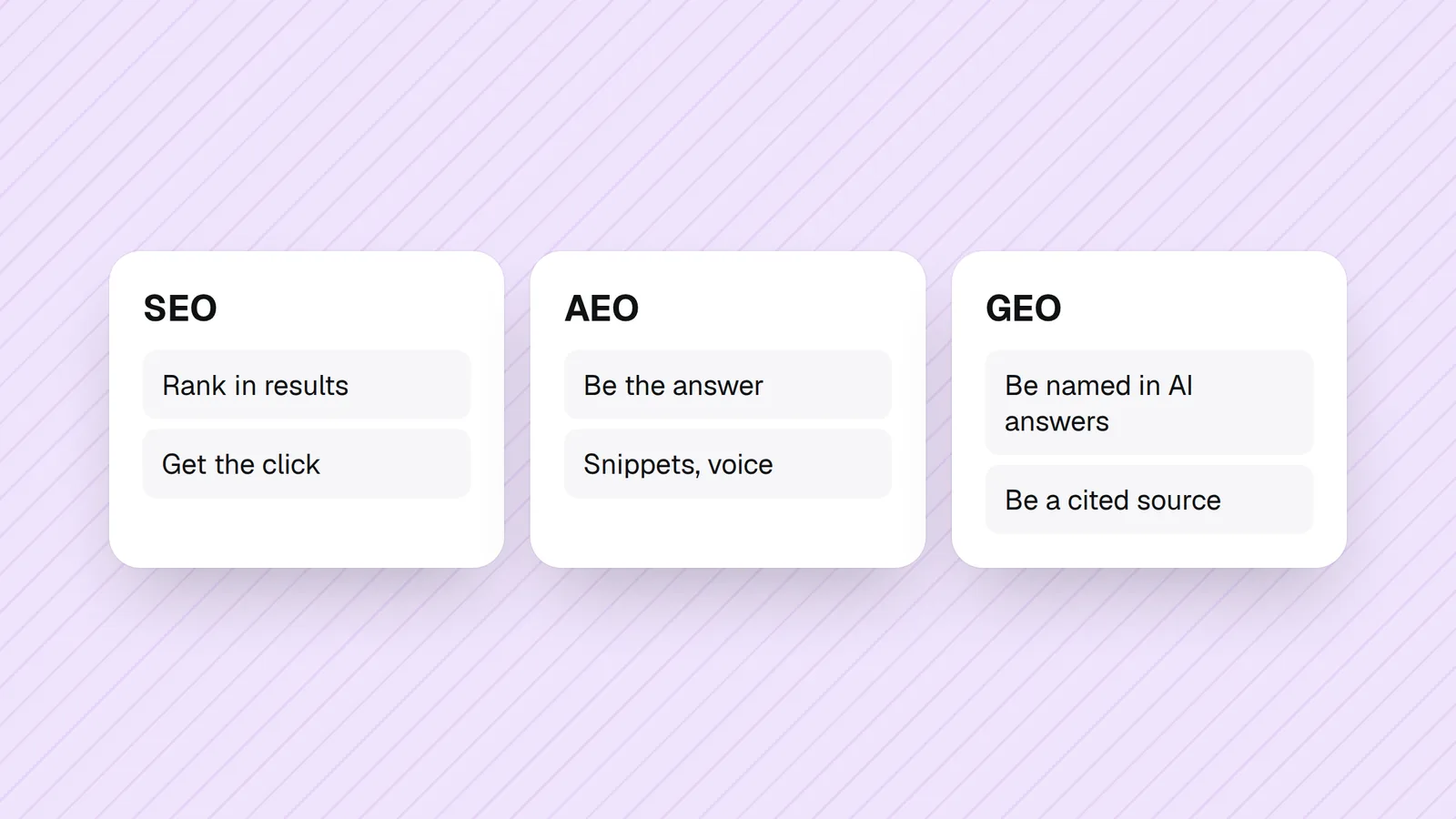
The terms side by side
| Term | Stands for | Origin | Target today |
|---|---|---|---|
| SEO | Search engine optimization | 1990s | Rankings in search results |
| AEO | Answer engine optimization | Late 2010s, featured snippets and voice | Direct answers, now AI answers |
| GEO | Generative engine optimization | Aggarwal et al., 2023 | Mentions and citations in AI-generated answers |
| AI SEO | SEO for AI search | Marketing term, 2023 onward | Same as GEO and AEO |
| LLM SEO / LLMO | Large language model optimization | Marketing term | Same, with a focus on what models know |
AEO: from featured snippets to AI answers
Answer engine optimization started when Google began showing direct answers above results (featured snippets) and voice assistants read one answer aloud. The goal was to be that single answer: a concise paragraph, list or table that directly answered the question, under a heading that matched it.
When ChatGPT, Perplexity and Google's AI features arrived, the term stretched to cover them. The core habit carried over: answer the question in the first sentence, in a form that can be lifted out.
GEO: a research term that became a category
GEO comes from "GEO: Generative Engine Optimization" (Aggarwal et al., presented at KDD 2024), which tested how changes to a page changed its visibility in generated answers. Citing sources, adding quotations and adding statistics helped; keyword stuffing did not. The term spread because it named the new thing precisely: engines that generate an answer from several sources. See what is generative engine optimization.
How the work overlaps
| Work | SEO | AEO / GEO |
|---|---|---|
| Crawlable, indexable pages | Core | Core, plus AI search crawlers (OAI-SearchBot, PerplexityBot) |
| Relevant, helpful content | Core | Core, written answer-first and specific |
| Structured data | Rich results | Helps understanding; no special AI schema |
| Links from other sites | Core ranking signal | Helps pages be found; less central |
| Being named on third-party pages | Secondary | Central for recommendation questions |
| Measurement | Rankings, clicks | Mentions, citations, share of voice on a question set |
The overlap is large because ChatGPT search, Perplexity and Google's AI features all start from web search. The difference is concentrated in two places: the unit (a quotable passage and a brand, rather than a page) and the off-site work (being named on the specific lists, reviews and threads the answers read). More in AI SEO vs traditional SEO.
Which term should you use?
Use the one your audience searches for and your team understands. GEO is common with marketers and in tool categories; AEO with SEO practitioners and agencies; "AI visibility" with people who just want to know whether ChatGPT mentions them. Tools in this space use all three, often on the same page.
Questions people ask
Is AEO the same as GEO?
In current use, almost. AEO is older and began with featured snippets and voice; GEO was coined for generative AI answers. Both now mean being named and cited in AI answers.
Do I need an AEO or GEO agency?
Not to start. The first steps (checking crawler access, listing buyer questions, finding the pages AI cites) take hours, not a retainer. Agencies help once you need the outreach done for you.
Does GEO replace SEO?
No. AI assistants read what search finds, so SEO remains the foundation.